
RISE
Your Personal Space Briefing
Hey there! Hold onto your seats, this weekend delivered high-stakes engineering drama and critical new findings that could redefine our cosmic origins. Things are getting disruptive!
Here’s what’s orbiting in today’s issue:
- 🧊Europa's ice feeds ocean life
- 💧NASA limits Earth's water source
- 🌌Chandra hears deep cosmic sounds
- 🛰️Damaged Shenzhou survives reentry
- 🚀Rocket Lab tank suffers rupture
📸 Image of the Day
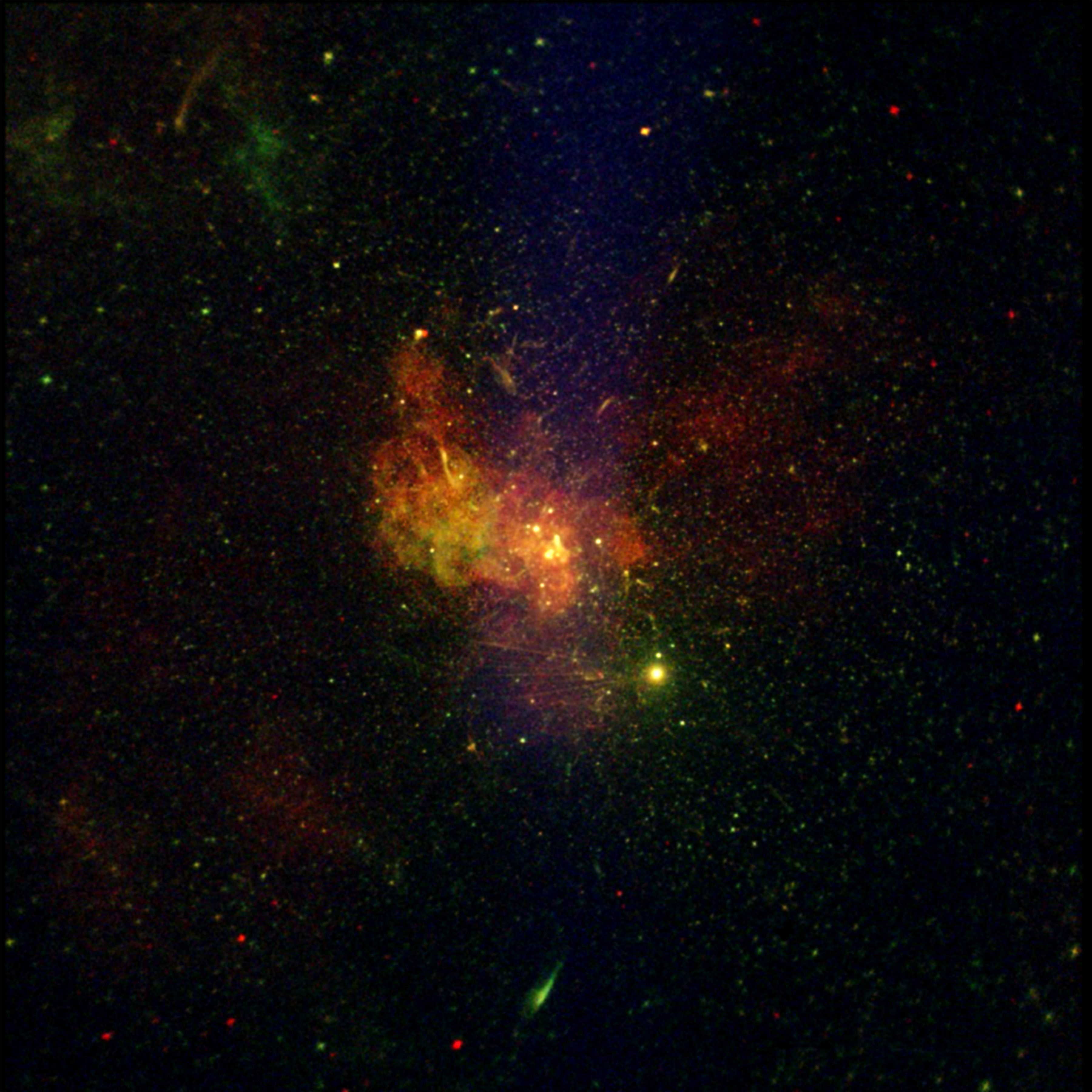
X-ray Images of Sagittarius A* | NASA Chandra X-ray Observatory
🧊 Europa's Sinking Ice May Deliver Life-Supporting Chemicals To Ocean Read More
- Washington State University researchers modeled how salt-rich ice pockets on Europa could sink. This geological process, known as lithospheric foundering, may transport surface chemicals to the moon's hidden subsurface ocean.
- Computer simulations of an 18.6-mile-thick ice shell showed surface material descending from the top 300 meters. In weakened ice scenarios, this sinking began after 30,000 years, delivering materials to the ocean.
- This mechanism provides a viable pathway for delivering surface oxidants to the subsurface ocean, boosting Europa's habitability potential. NASA's Europa Clipper mission, arriving in 2030, will further investigate this process.
🚀 Upcoming Launches
GPS III SV09 | Falcon 9 Block 5 | 2026-01-26
23:42 EST | Cape Canaveral SFS, FL, USA
Bridging The Swarm (NeonSat-1A) | Electron | 2026-01-27
19:55 EST | Rocket Lab Launch Complex 1, Mahia Peninsula, New Zealand
💧 NASA Findings Challenge Long-Held Theory On Earth's Water Origin Read More
- NASA (National Aeronautics and Space Administration) scientists led by Tony Gargano analyzed Apollo lunar regolith samples. They aimed to clarify the Moon's impact history and constrain how much water meteorites delivered.
- The team used triple oxygen isotope analysis on lunar soils, a method unaffected by impact forces. They found at least ~1% of the regolith by mass contained material from carbon-rich meteorites.
- These results suggest late meteorite delivery supplied only a small fraction of Earth's oceans, challenging a long-held origin theory. Future Artemis samples will provide more data from different lunar regions.
🌌 NASA's Chandra Releases Ultimate Catalog Of Cosmic X-ray Data Read More
- NASA's Chandra X-ray Observatory team released the Chandra Source Catalog (CSC) 2.1. This ultimate compendium archives X-ray data from the telescope's observations through the end of the year 2020.
- The catalog contains over 400,000 unique sources and 1.3 million individual detections. One deep field image of the Galactic Center combines 86 observations over three million seconds of exposure time.
- The CSC provides a foundational dataset for multi-wavelength astronomy, enabling researchers to correlate X-ray phenomena with observations from other observatories like the James Webb and Hubble Space Telescopes for new discoveries.
📅 Today in Space History:
On January 26, 1978, ESA launched the International Ultraviolet Explorer (IUE). Operating for eighteen years, the mission exceeded its planned lifespan by fourteen years. It provided invaluable ultraviolet data on celestial objects' physical conditions, becoming the world's most productive scientific satellite.
🛰️ Damaged Shenzhou-20 Spacecraft Safely Returns To Earth Read More
- China's Shenzhou-20 crew successfully concluded their mission by returning to Earth in a damaged spacecraft. The incident was the country's first major human spaceflight emergency triggered by a suspected debris impact.
- The taikonauts performed critical on-orbit internal repairs to their reentry capsule following the suspected micrometeoroid strike. The successful landing demonstrates the robustness of their emergency procedures and spacecraft systems under duress.
- The successful recovery validates China's in-space emergency response protocols, boosting confidence in their long-duration Tiangong space station operations. The follow-on Shenzhou-23 mission has already arrived at the launch site.
🚀 Rocket Lab's Neutron Rocket Suffers Fuel Tank Rupture During Test Read More
- Rocket Lab engineers experienced a major setback during Neutron rocket development at their Wallops, Virginia facility. The main stage fuel tank of the first flight article ruptured during a pressure test.
- The carbon composite stage one tank failed during a planned hydrostatic pressure trial intended to validate structural limits. The 141-foot-tall rocket is designed to lift 13,000 kilograms to low Earth orbit.
- This failure makes the planned Q1 2026 debut launch highly improbable, according to analysts. Rocket Lab will now use the next stage tank already in production to continue its development campaign.
❓ Question of the Day
Which space mission would you save first if funding ruptures?
Send us a reply with your answer!
We truly appreciate you joining us for todays cosmic download. The universe never disappoints in cooking up fresh surprises, does it? See you soon!
Clear skies ahead,
- Zapp